Responsible Gambling: The Tools That Actually Help
 Liam Jones
Last Updated:
Liam Jones
Last Updated:
Nobody starts gambling expecting it to become a problem. It begins as entertainment. A fun distraction, a bit of excitement, maybe a lucky win to tell your friends about. For most people it stays exactly that. For some, the line between entertainment and compulsion blurs gradually, and by the time they notice it, the damage is already real. Responsible gambling is about catching the drift early and using the built-in tools to stop it before it gets expensive.
Deposit Limits
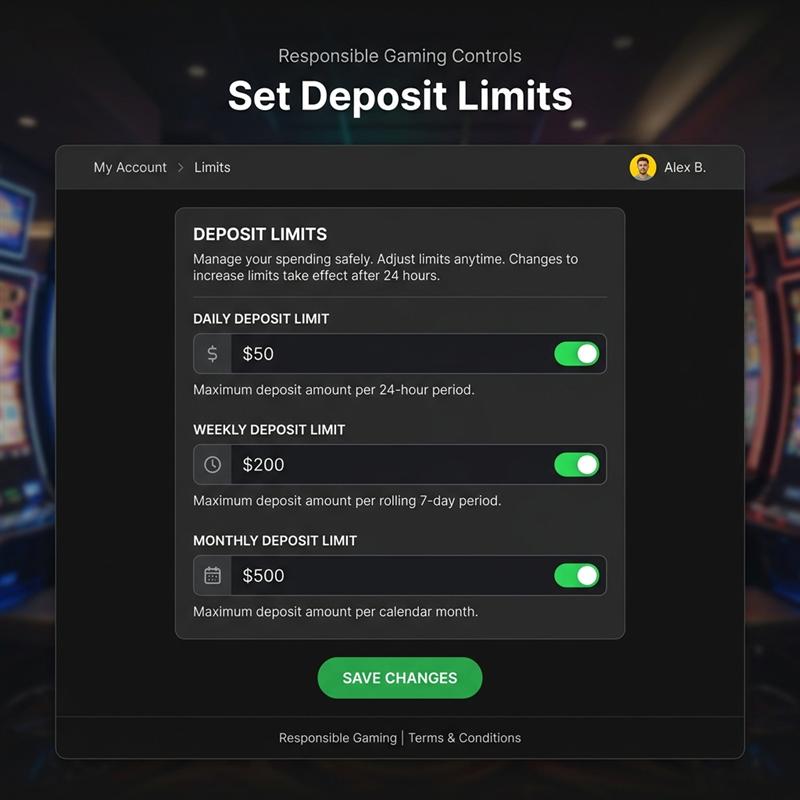
Every licensed online casino offers deposit limits. Daily, weekly, monthly caps on how much money you can push into your account. It's the most basic form of protection, and it works because it takes the decision out of your hands in the moment that matters most.
Set the limit when you open the account, not after a losing streak. Pick a number that represents genuine entertainment spending. Money you can lose in full without it touching your bills, your savings, or anything that matters. Once the cap is in, the casino refuses deposits past it. No matter what you try.
You can usually lower the limit instantly. Raising it is a different story. Most operators lock that request behind a cooling-off window of 24 to 72 hours. That delay isn't bureaucracy, it's the whole point. It gives you time to talk yourself out of a bad call made at 2am.
Loss Limits and Session Limits
Deposit caps are the headline, but there are a few more levers worth knowing about:
- Loss limits: a maximum amount you're willing to lose in a day, week, or month. Hit it and the account locks until the period rolls over. This one kills the chasing impulse before it starts.
- Session time limits: a cap on how long a single session can run. When the clock hits zero, the casino either logs you out or drops a hard reminder in front of you.
- Wagering limits: a ceiling on total amount wagered, win or lose. Less common, but useful if you're the kind of player who cycles the same balance dozens of times in a night.
These work best stacked. Deposit limit keeps you from throwing more money in. Loss limit kills the chase. Session limit keeps you from making 3am decisions that 9am-you wouldn't make.
Reality Checks
Reality checks are small pop-ups that appear during play and show two things. How long you've been sitting there. How much you're up or down. Doesn't sound like much. In practice, they break the trance that slots and live tables are specifically designed to create.
You pick the interval. Every 30 minutes, every hour, something custom. When it fires, you can keep going or log out. The reason these help isn't complicated. Most people lose track of time at a casino. Putting "you've been playing for 2 hours, you're down €140" on the screen is often the whole intervention needed.
Self-Exclusion
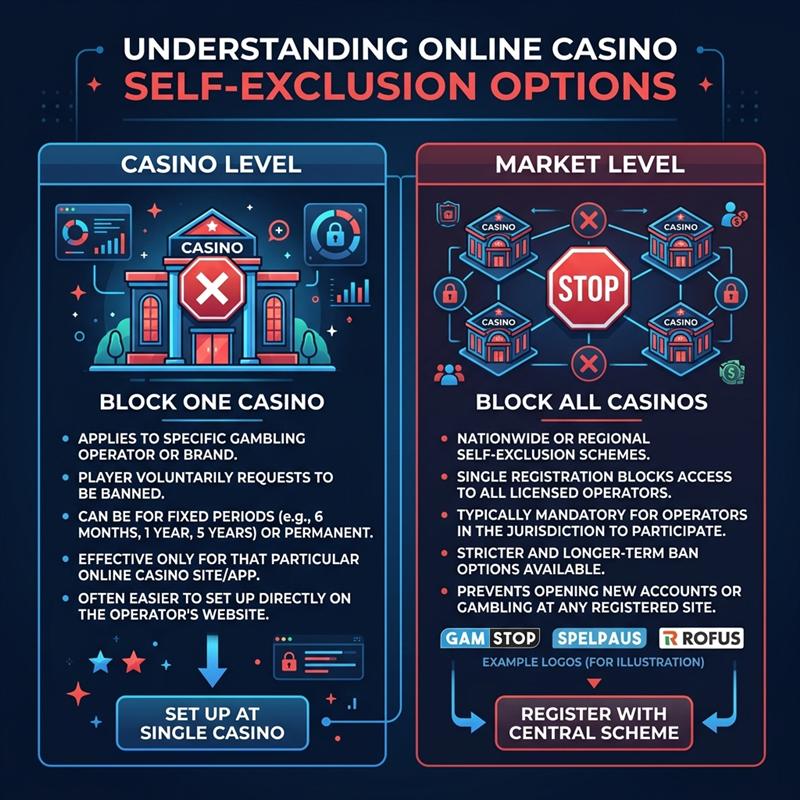
Self-exclusion is the heavy tool. It locks you out of a casino, or every licensed casino in a regulated market, for a fixed period or permanently. Not a cooldown. Not a pause. A real block.
- Casino-level: you exclude yourself from one operator. Account closed, marketing emails cut off, and a new account under the same details gets rejected during the exclusion window.
- Market-level: in regulated markets like the UK (GamStop), Sweden (Spelpaus), and Denmark (ROFUS), a national register blocks you from every licensed casino at once. Far more effective than opting out one site at a time, because the next casino is always one search away, and market-level exclusion closes that door too.
Exclusion periods usually run from six months to five years, with a permanent option for anyone who wants the door closed for good. Once activated, it's deliberately hard to reverse. That's the feature, not the bug. Casinos licensed by the UKGC or MGA are legally required to honor self-exclusion and face real penalties if an excluded player slips through and keeps betting.
Warning Signs to Watch For
Problem gambling doesn't announce itself. It builds through patterns that feel ordinary until, one day, they don't. Be honest with yourself about any of these:
- Spending more money or time than you meant to, and not just once.
- Chasing losses. Depositing again after a bad session to get even.
- Borrowing, or dipping into savings, to keep playing.
- Feeling irritable, restless, or anxious on days you don't gamble.
- Lying about how much you play or how much you're down.
- Letting work, responsibilities, or relationships slide because of it.
- Using gambling as an escape from stress, boredom, or anything you don't want to feel.
If more than one or two of these sound familiar, step back. It doesn't mean you have a gambling problem. It means the activity is drifting from entertainment toward something you should pay attention to. Catching it at this stage is the whole reason these tools exist.
Where to Get Help
If gambling is making your life worse, free and confidential help is available. You don't need to hit rock bottom to reach out:
- GambleAware (UK): gambleaware.org. Information, advice, and referrals.
- GamCare (UK): gamcare.org.uk. Free counseling and support.
- Gamblers Anonymous: gamblersanonymous.org. Peer support meetings in most major cities and online.
- National Council on Problem Gambling (US): 1-800-522-4700. 24/7 helpline.
Asking for help isn't weakness. These organizations exist because gambling problems are common, treatable, and not something to carry quietly. The earlier you reach out, the shorter the road back.
A Healthy Approach
Gambling is entertainment with a cost. Same category as a concert ticket or a dinner out. Set a budget before you start. Treat losses as the price of the night, not money to win back. Walk away when it stops being fun. Use the tools the casino gives you, they exist because they work. And if it ever tips from fun to anxious, take a break. The casino will still be there when you're ready to come back on better terms.